Campaign Analytics
-
Overview:
The Campaign Analytics dashboard empowers users to closely monitor the full lifecycle and performance of their messaging campaigns. By presenting both high-level summaries and granular details, it enables marketing, support, and product teams to optimize outreach, troubleshoot issues, and make data-driven adjustments in real time.
-
How to Access
- From the left sidebar, click Analytics to expand the menu.
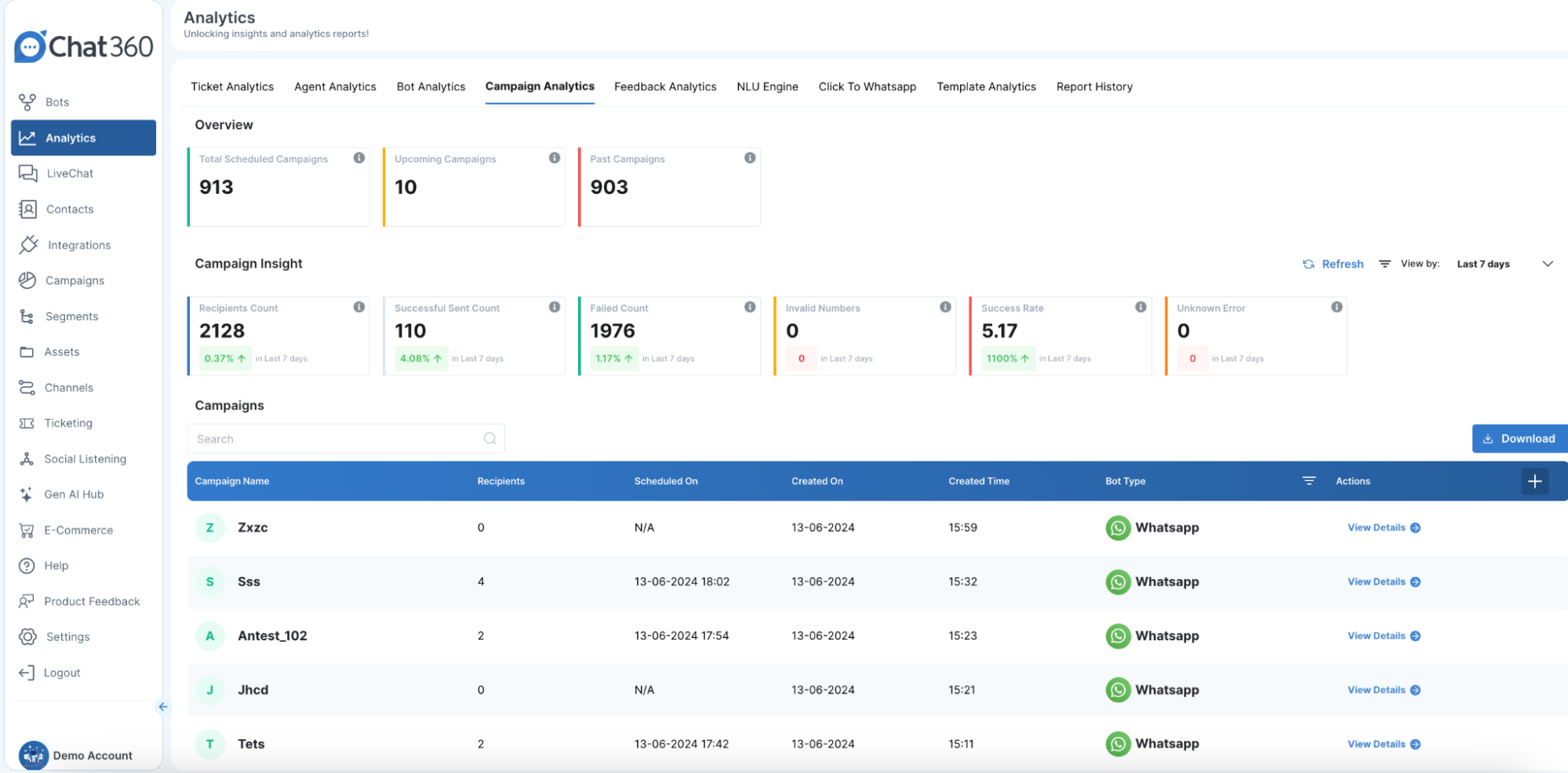
- Select the Campaign Analytics tab at the top of the analytics page to reveal campaign-specific metrics and visualizations.
-
Key Sections
-
Key Metrics
A row of summary cards presents the most critical campaign KPIs at a glance:
- Total Scheduled Campaigns: The count of all campaigns planned and queued for delivery, helping you track upcoming workloads.
- Upcoming Campaigns: Number of campaigns awaiting dispatch, so you can verify timing and readiness.
- Past Campaigns: Total campaigns already executed, providing a quick measure of historical activity.
- Recipients Count: Aggregate number of unique contacts targeted across all campaigns in the selected period, indicating your reach.
- Successful Sent Count: Number of messages successfully handed off to the channel—an immediate gauge of operational health.
- Failed Count: Messages that could not be sent due to errors or channel issues, signaling areas for investigation.
- Invalid Numbers: Count of recipients filtered out for incorrect formatting or de-activated accounts, highlighting data-quality issues.
- Success Rate: Percentage of successful sends versus attempted sends, tracking overall delivery efficacy.
- Unknown Error: The volume of failures without a known cause, guiding deeper root-cause analysis.
-
Campaign List
A scrollable list offers a line-by-line breakdown of each campaign’s details:
- Campaign Name: Descriptive title for quick identification (e.g., “Spring Sale Blast”).
- Recipients: Number of contacts targeted by this specific campaign, showing scale.
- Scheduled On: Date and time when the campaign is set to run or ran, ensuring timing accuracy.
- Created On & Created Time: Timestamp of when the campaign record was first created in the system, aiding audit trails.
- Bot Type: Channel used for delivery (e.g., WhatsApp, SMS), allowing channel-specific comparisons.
- Actions: Icons to view detailed analytics, edit campaign parameters, or delete the campaign if needed.
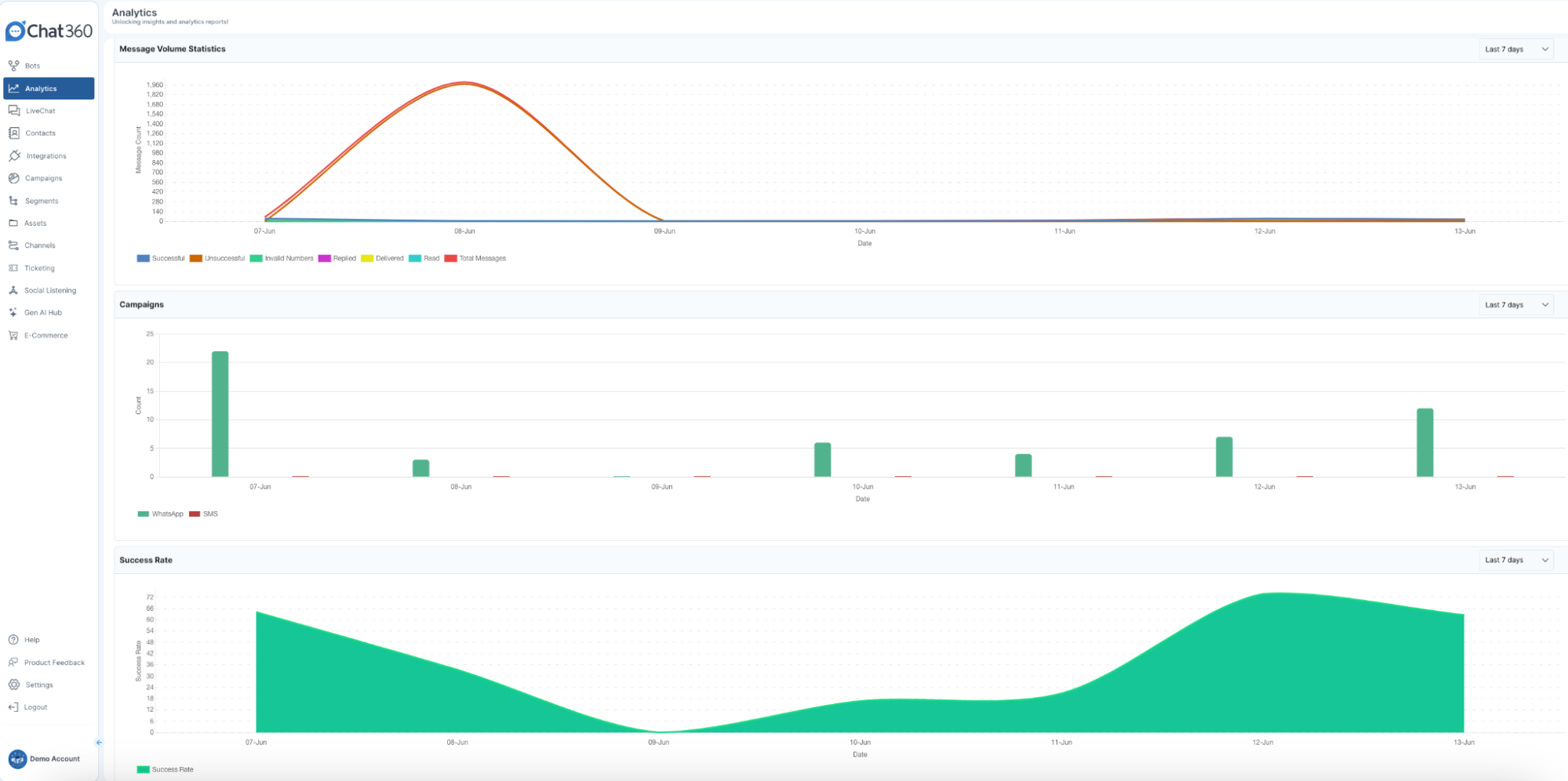
- Message Volume Statistics: A stacked-bar or line chart showing daily or hourly message counts, color-coded by status (successful, failed, pending).
- Campaign Count by Channel: A bar chart illustrating how many campaigns ran on each channel over time, revealing channel preference and load.
- Success Rate Trend: A line graph tracking day-over-day or week-over-week delivery success percentages, highlighting performance stability or decline.
-
3. Visual Analytics
Interactive graphs help you spot trends and anomalies at a glance:
- Controls & Filters
- Date Range Selector: Choose preset windows (“Last 7 Days,” “Past Month,” etc.) or set custom start and end dates for focused analysis.
- Channel Filter: Drill down to WhatsApp, SMS, Email, or any other enabled channel to compare performance across platforms.
- Status Filter: Toggle between all campaigns or those with a particular outcome (e.g., only failed campaigns) to speed troubleshooting.
- Refresh Button: Reload all cards and charts with the latest data without navigating away from the page.
- Export Options: Download raw campaign data or visual snapshots as CSV or image files for offline reporting or stakeholder presentations.
- Usage Tips
- Optimize Send Windows: Use Upcoming Campaigns and Message Volume charts to avoid peak-hour congestion and improve deliverability.
- Data Hygiene: Monitor Invalid Numbers regularly and cleanse contact lists to reduce failures and unknown errors.
- Channel Strategy: Compare Campaign Count by Channel to allocate budget and effort where engagement is highest.
- A/B Testing: Leverage the Success Rate Trend to measure incremental improvements when you change messaging or targeting.
- Root-Cause Analysis: Filter on Failed Count and Unknown Error to identify recurring issues (e.g., API timeouts, template rejections) and iterate on fixes.
Thank you for your feedback!
We appreciate your feedback!