Journey
The Journey feature empowers users to orchestrate end-to-end, automated messaging workflows across multiple channels. By combining logic-driven components—such as WhatsApp, SMS, Email, Push, and Webhooks—businesses can deliver personalized, timely, and context-aware experiences that guide customers through onboarding, promotions, reminders, and re-engagement sequences.
-
Key Use Cases:
- 1. Onboarding
- Automatically welcome and educate new users over WhatsApp and Email to drive early engagement.
- 2. Special Promotions
- Roll out multi-channel discount campaigns, triggering SMS and Push notifications at optimal intervals.
- 3. Timely Reminders
- Detect drop-offs in the journey (e.g., abandoned carts) and send gentle nudges via RCS or Email.
- 4. Re-engagement
- Design long-running sequences spanning days or weeks, weaving together messages across channels to win back inactive users.
-
Creating a New Journey:
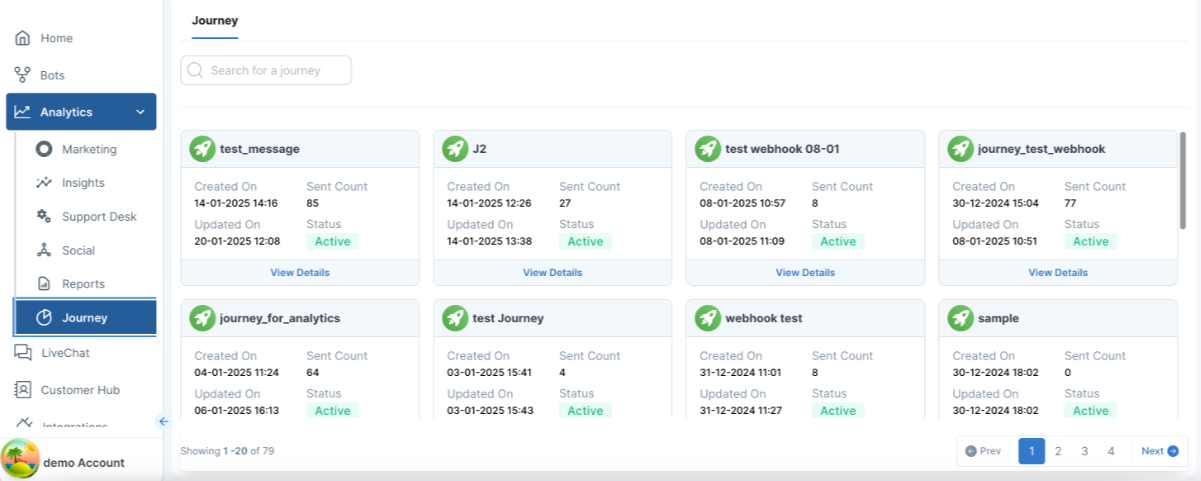
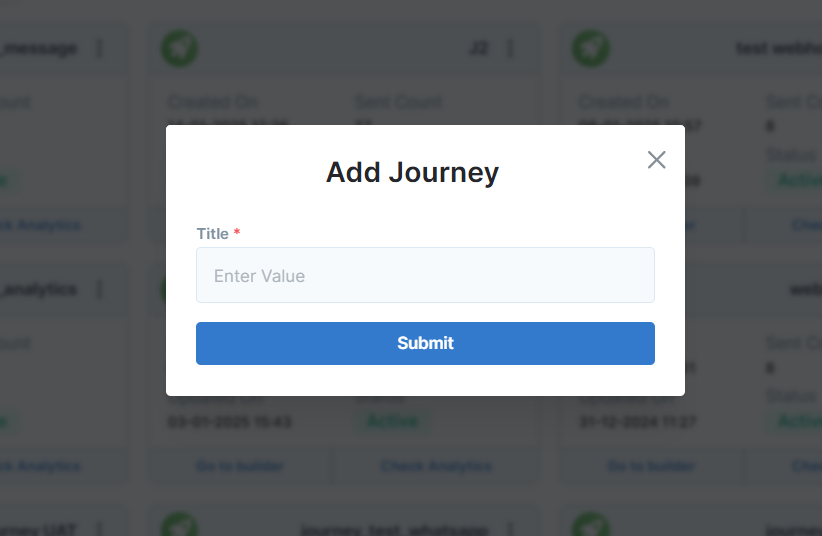
- From the side panel, click Journey → Add New.
- Enter a Journey Name and optional Description, then Create.
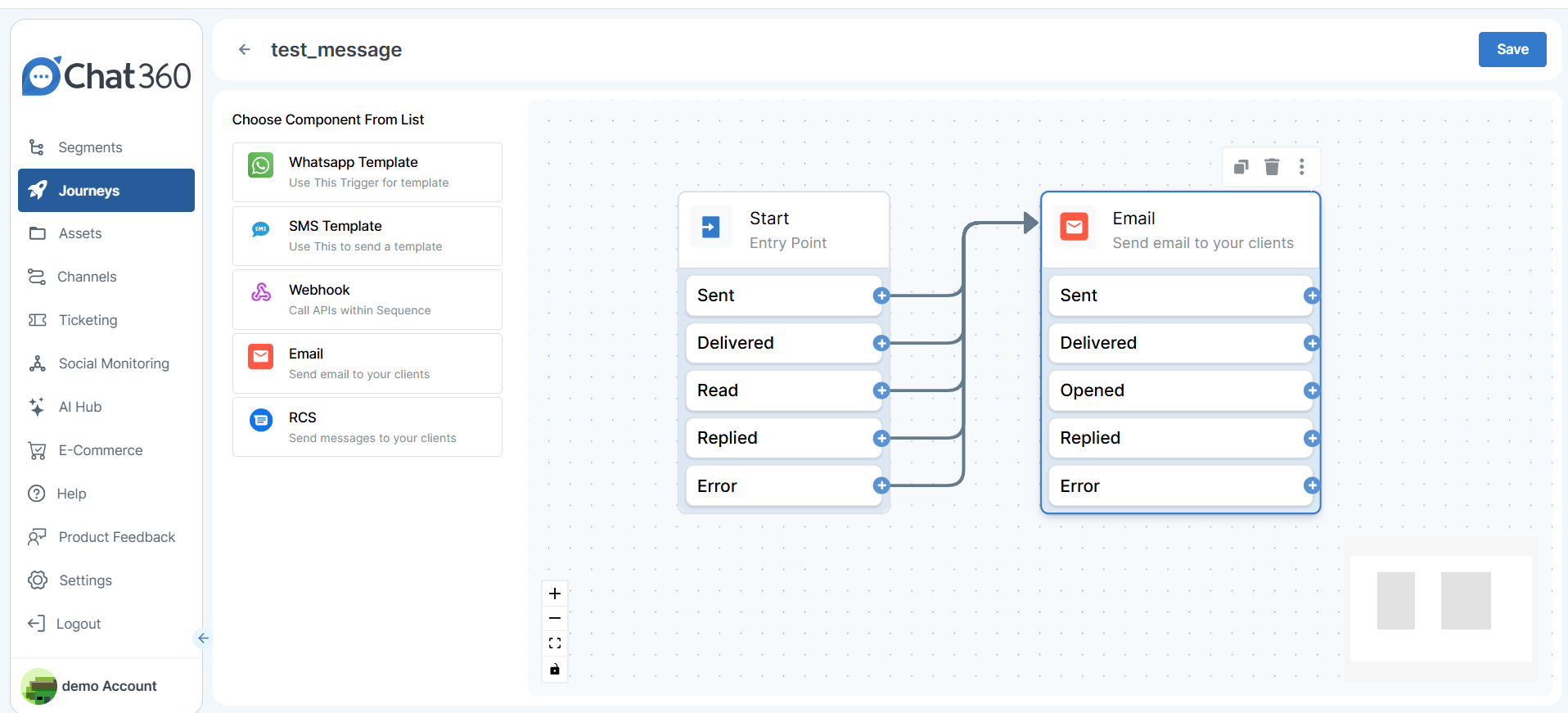
- Drag the Start Component onto the canvas.
- Add channel components (WhatsApp, SMS, RCS, Email, Push, Webhook) in sequence.
- Connect components by linking output dots to input dots to define the customer path.
- Click a component to open its settings panel.
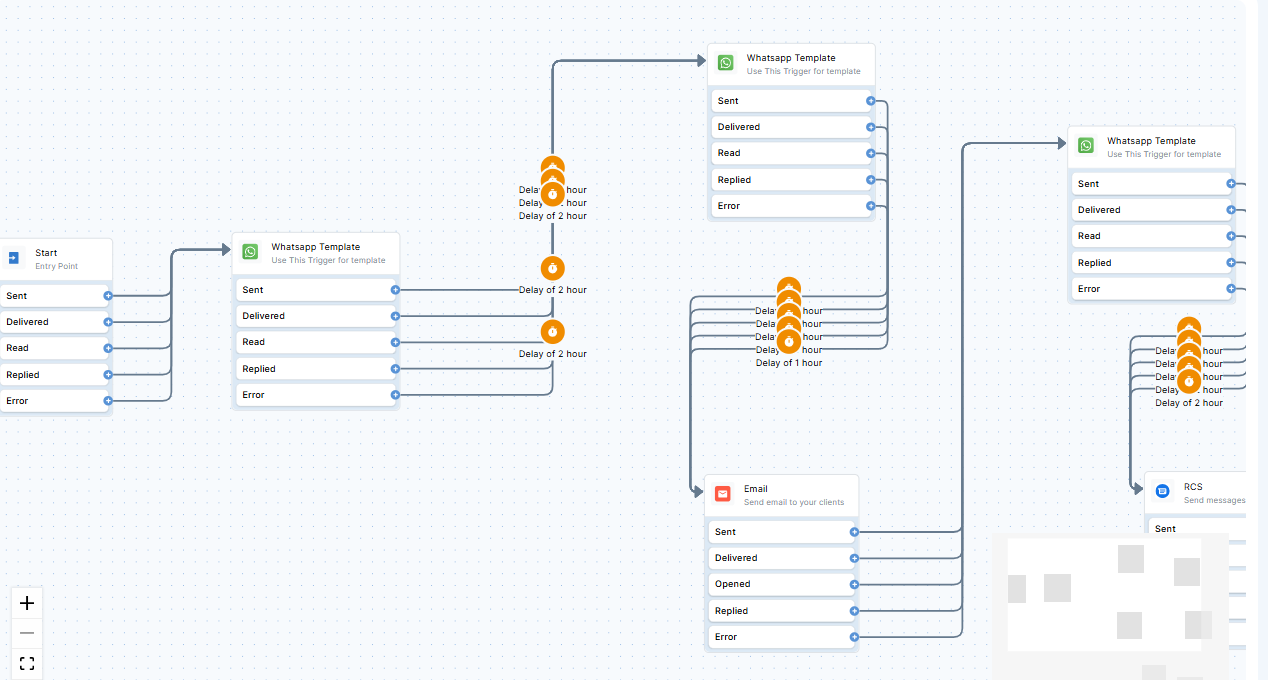
- Define Messages, Delays (minutes/hours/days), and Conditional Actions for statuses (sent, delivered, read, error).
- Save your settings and repeat for each node in the journey.
- Once all nodes are configured, click Publish.
- All journeys automatically trigger when the Start conditions are met (e.g., user signup, campaign send).
-
1. Access Journey Designer
-
2. Build Your Flow
-
3. Configure Each Component
-
4. Activate & Monitor
-
Journey Components:
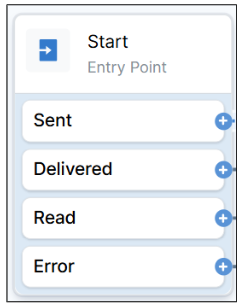
- Start Component
- Triggers the journey based on defined events (campaign status, webhook call, API trigger).
- Configure follow-up logic for each incoming status.
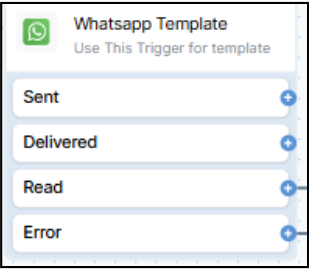
- WhatsApp Component
- Sends templated messages with dynamic variables.
- Branches based on Sent, Delivered, Read, or Error statuses.
- Schedule follow-ups at custom intervals per status.
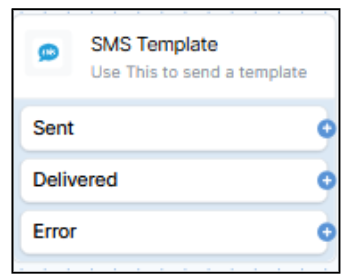
- SMS Component
- Delivers plain or rich SMS with retry logic on failures.
- Supports status-based branching and timed follow-ups.
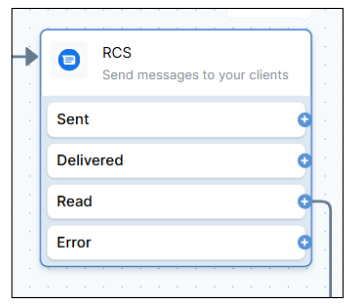
- RCS Component
- Leverages rich media (images, carousels, quick replies).
- Handles status transitions (sent, delivered, error) with configurable delays.
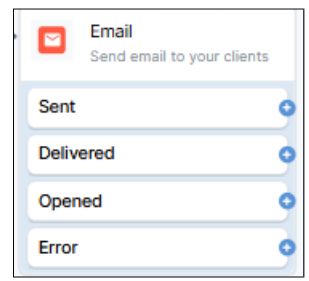
- Email Component
- Sends HTML or text emails; tracks Sent, Delivered, Opened, Error statuses.
- Allows attachments and CTA buttons with scheduled re-tries.
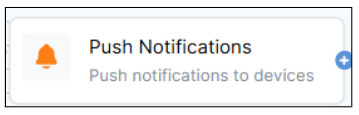
- Push Notification Component
- Issues real-time notifications for Web, Android, or iOS.
- Branches on Sent, Delivered, Error, with per-platform timing controls.
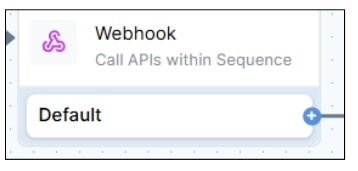
- Webhook Component
- Invokes external APIs (GET, POST, PUT, DELETE) at any point in the journey.
- Configure request body, headers, timeout, and error handling to integrate third-party systems.
-
Creating a New Journey:
- Total Started, Completed, Drop-Offs, Average Duration.
- WhatsApp: Sent, Delivered, Read, Replied
- SMS/RCS: Sent, Delivered, Errors
- Email: Opens, Clicks, Bounces
- Push: Sends, Click-Throughs, Failures
1. Navigate to Analytics → Journey in the side panel.
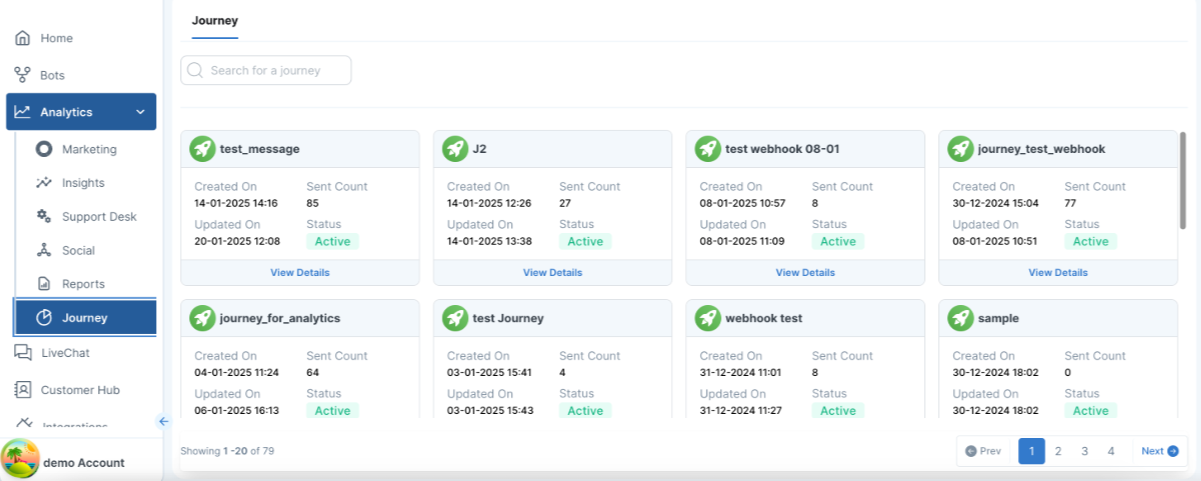
2. View a list of all active and completed journeys with summary metrics:
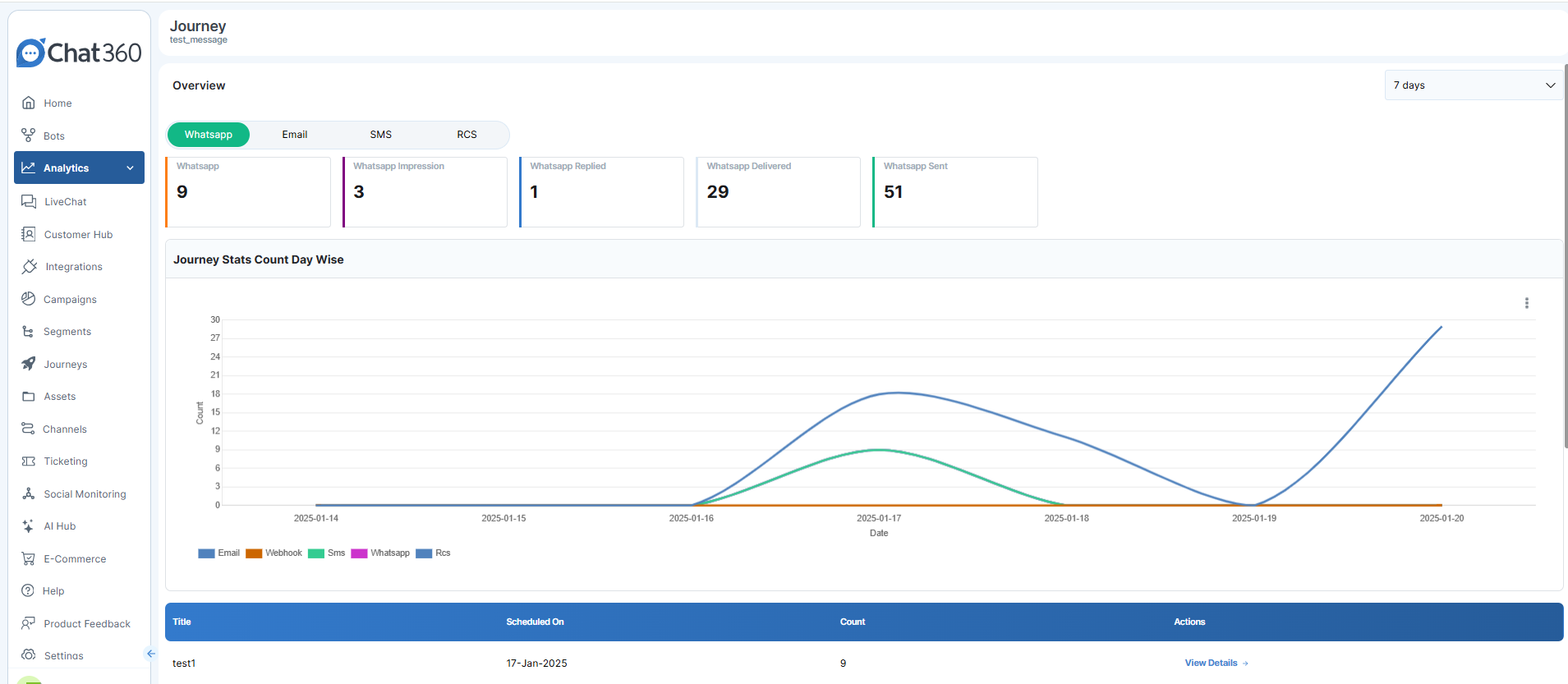
3. Drill down into per-component metrics for each channel:
4. Export journey performance as CSV or save visual charts for stakeholder reporting.
By leveraging the Journey feature, teams can design sophisticated, multi-touchpoint campaigns that adapt in real time to user behaviors, ensuring maximum engagement and conversion while minimizing manual intervention.
-
Use Case Examples for the Journey Feature
1. Multi-Channel Onboarding Journey
- Objective:
- Flow Design:
- Start Component: Triggered when a new user signs up.
- WhatsApp Component: Sends a welcome message with app usage tips.
- Delay: Wait 1 day.
- Email Component: Sends a "Getting Started" guide PDF.
- Push Notification: Remind user to complete profile setup.
- Webhook: Trigger a CRM update marking the user as "onboarded".
- Key Benefits:
- Reduces manual onboarding efforts.
- Ensures users are engaged across their preferred channel.
- Boosts app adoption and feature discovery within the first 72 hours.
-
2. Abandoned Cart Recovery
- Objective:Re-engage users who left items in their cart without purchasing.
- Flow Design:
- Start Component: Triggered when cart is abandoned.
- WhatsApp Component: Sends a welcome message with app usage tips.
- Delay: Wait 30 minutes.
- WhatsApp Component: Send personalized reminder with cart details.
- Email Component: Send follow-up with promotional coupon if no response in 6 hours.
- SMS Component: Final reminder after 24 hours.
- Webhook: Push user data to analytics tool if no conversion.
- Key Benefits:
- Increases cart recovery rate via automated nudge system.
- Provides multi-channel fallback to boost delivery and visibility.
- Tracks user behavior for future segmentation and retargeting.
-
3. Long-Term Promotional Campaign
- Objective:Promote a limited-time offer campaign across multiple channels over one week.
- Flow Design:
- Start Component: Triggered by campaign launch.
- Email Component: Send full product catalog with offer.
- Delay: Wait 1 day
- WhatsApp Component: Send limited-time coupon code.
- Push Notification: Send daily countdown reminder.
- SMS Component: Final day offer reminder.
- Webhook: Push lead conversion data to sales dashboard.
- Key Benefits:
- Improves conversion through continuous, multi-touch outreach.
- Reduces campaign drop-off using personalized reminders.
- Ensures compliance and template delivery tracking.
-
4. Post-Purchase Follow-Up Journey
- Objective: Improve customer retention by sending timely post-purchase messages.
- Flow Design:
- Start Component: Triggered on order status = "delivered".
- WhatsApp Component: Send thank-you note and invoice.
- Delay: Wait 3 days
- Email Component: Request product review.
- Push Notification: Share referral offer.
- Webhook Component: Update lead score in CRM.
- Key Benefits:
- Encourages positive feedback and social proof.
- Upsells by offering referrals or next-purchase discounts.
- Automates lead nurturing with minimal human effort.
-
5. Lead Re-Engagement Campaign
- Objective: Reconnect with inactive leads over a 2-week period.
- Flow Design:
- Start Component: Triggered for users inactive for 30+ days.
- Email Component: Re-engagement content with recent updates.
- Delay: Wait 2 days
- WhatsApp Component: Personalized message with use-case or testimonial.
- Push Notification: Alert about upcoming product release.
- Webhook Component: If read but no click, trigger custom audience sync to remarketing ad platform.
- Key Benefits:
- Increases engagement of dormant users via omnichannel approach.
- Converts cold leads to warm opportunities without manual chase.
- Aligns user intent signals with real-time follow-ups.