Omnichannel and PII
-
Overview
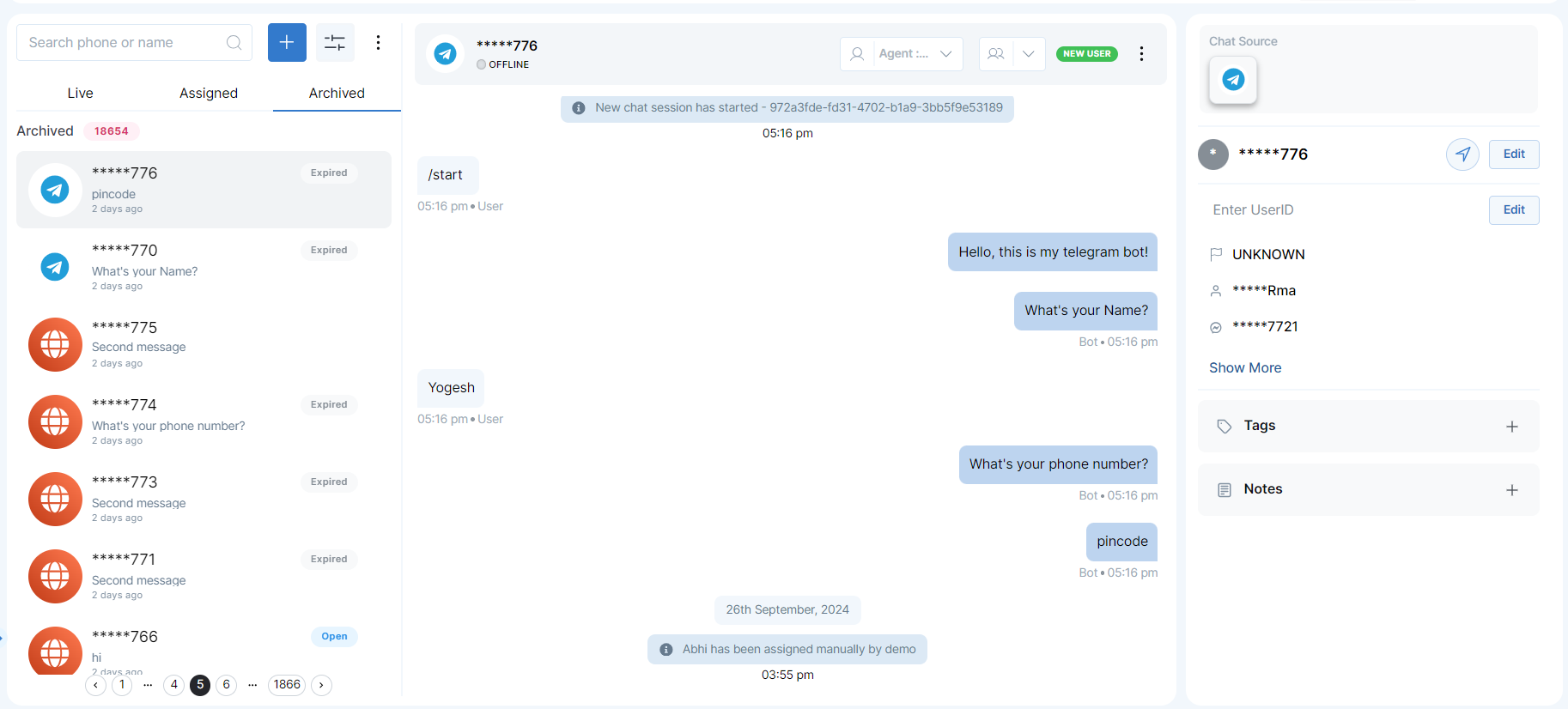
PII (Personally Identifiable Information) refers to any data that can uniquely identify an individual—names, phone numbers, email addresses, etc. PII Masking conceals these details for unauthorized roles, displaying placeholders (e.g., XXX-XXX-7890 or ****@domain.com) while allowing full visibility to permitted users.
-
Key Benefits
- Enhanced Privacy: Shields customer data from unauthorized viewing, strengthening trust.
- Regulatory Compliance: Meets GDPR, CCPA, and other data-protection mandates.
- Risk Reduction: Minimizes the chance of accidental data exposure or breaches.
-
Configuration Steps
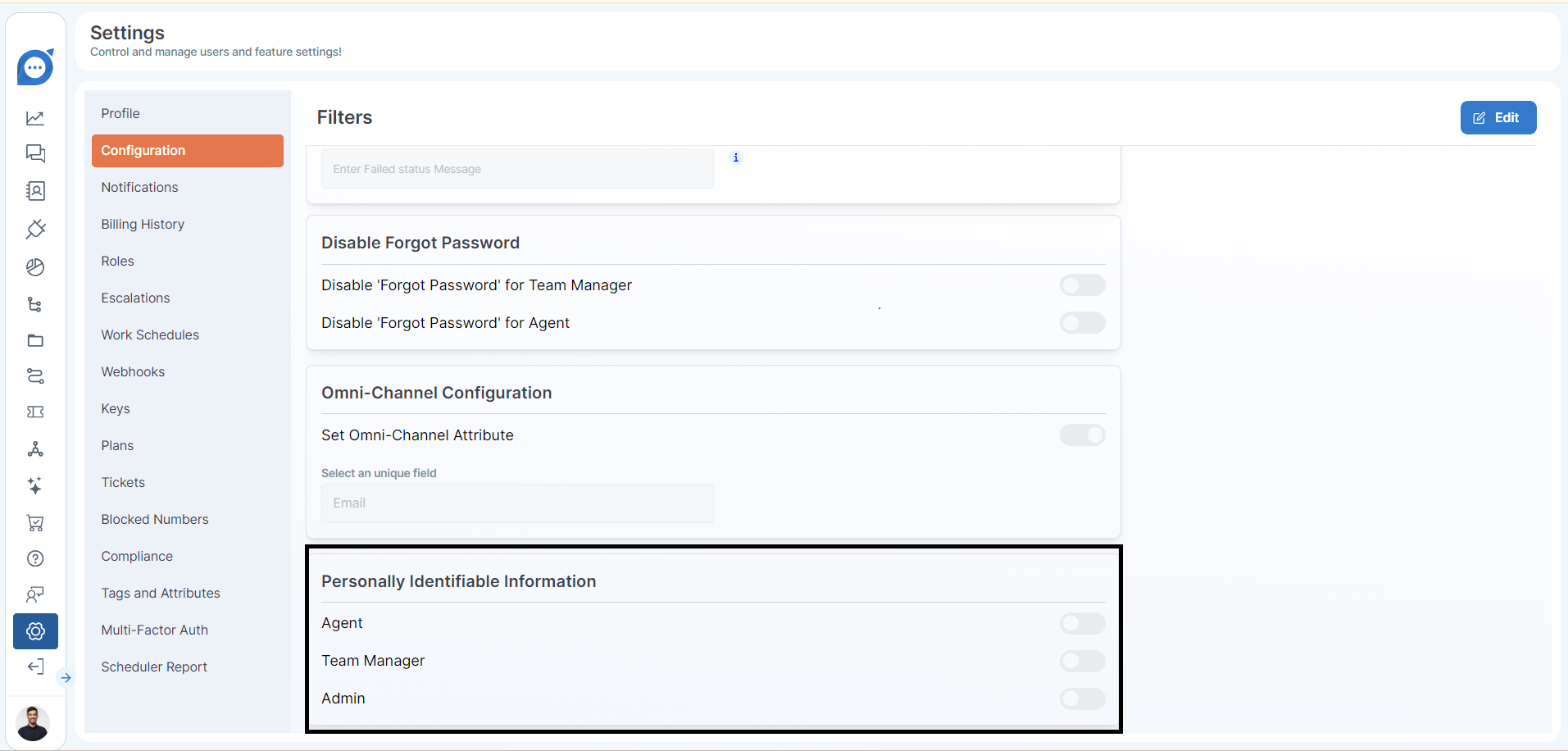
- Log into Chat360 → Settings → Configuration.
- Scroll to PII (Personally Identifiable Information).
- Toggle ON for each role (Admin, Agent, Team Manager) that should see masked data.
- Go to Tags & Attributes → Add New.
- Create variables (e.g., @user_name, @user_number).
- Ensure toggles are active → Save to enforce masking across the platform.
-
1. Navigate to Settings
-
Add Attributes from Tags and Attributes:
- After the toggle is enabled, go to Tags and Attributes.
- Add necessary attributes or variables like @user_name or @user_number to be used within the platform.
-
Enable PII Toggle:
- Once you've added the attributes, ensure the PII Toggle is turned ON for masking sensitive information.
- This will protect sensitive data, such as phone numbers or email addresses, by applying PII masking.

Once enabled, all personal data will be masked in your system for roles where the toggle is active. This provides an extra layer of security, ensuring that sensitive information is handled properly and protected at all times.
-
Omnichannel: Set up a unique attribute to identify the user
Omni-Channel Integration Overview:
Omni-channel integration enables users to sync various communication channels (such as WhatsApp, Facebook, Email, etc.) into a single platform. This provides a unified view of customer interactions, making it easier to manage and respond to conversations across multiple platforms.
-
Key Benefits of Omni-Channel Integration:
- All customer conversations from different channels are accessible in one dashboard.
- Users can respond to messages across platforms without needing to switch between multiple apps, improving workflow and reducing complexity.
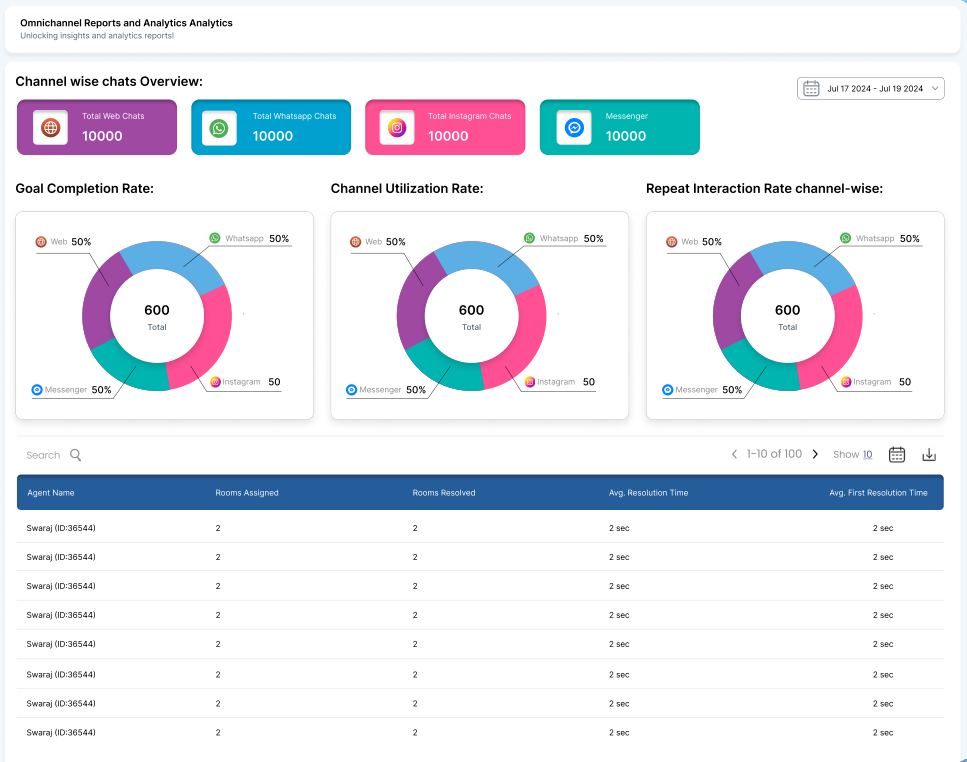
- Provides unified data insights by tracking performance metrics across all communication channels.
- This centralised data helps businesses better understand customer interactions, behaviours, and preferences, leading to more informed decisions.
- Simplifies communication processes by consolidating all channels into one interface, reducing the time spent navigating between different platforms.
- Increases productivity by offering a streamlined experience for managing customer conversations, ultimately leading to faster response times and better service delivery.
-
1. Centralised Management:
-
2. Enhanced Analytics:
-
3. Improved Efficiency:
-
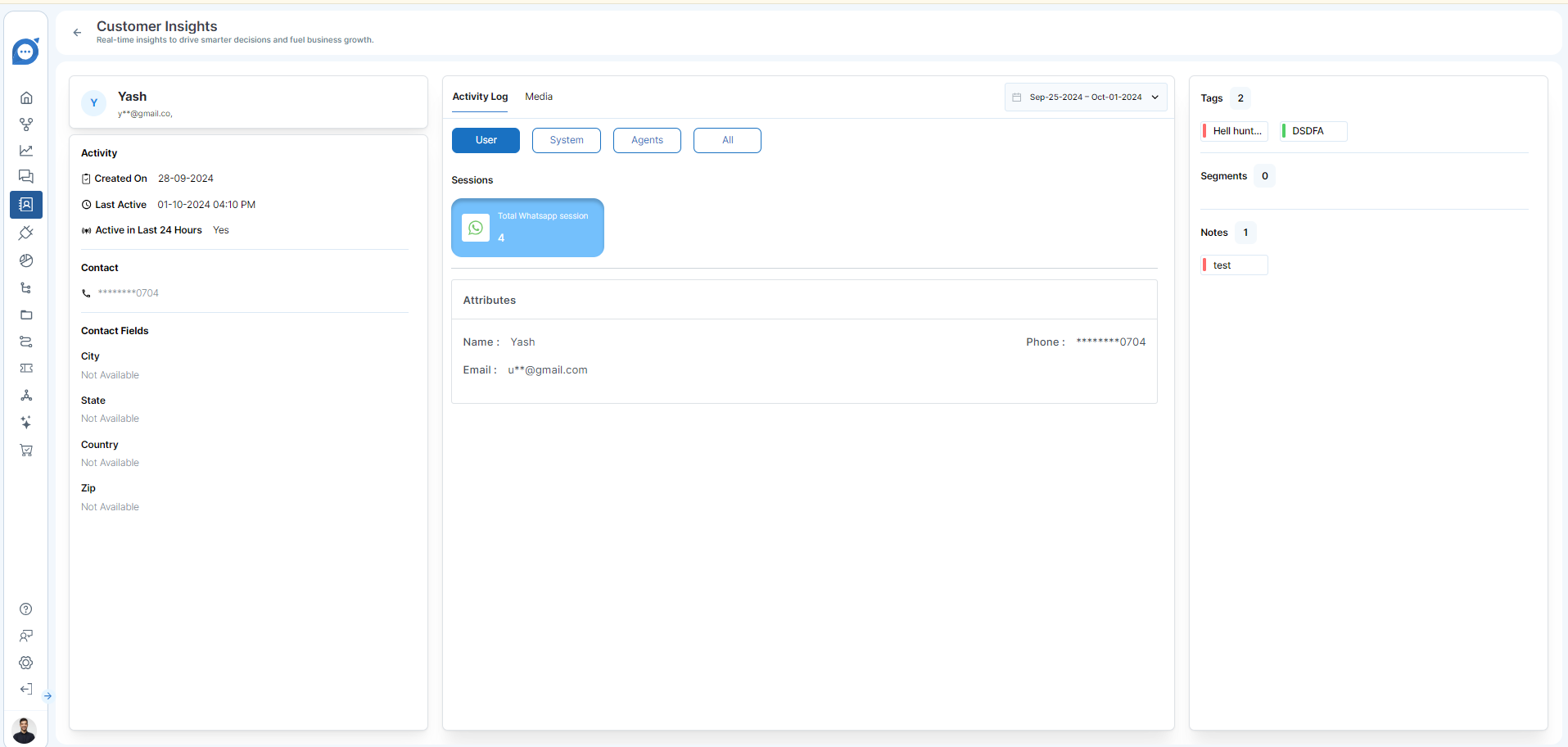
Customer Insight in the Customer Hub:
Enhanced Customer Profiling: Omni-channel integration provides a detailed profile of customers by consolidating data from all communication channels. This allows businesses to gain deeper insights into individual customer preferences, behaviours, and communication patterns, enabling more personalised and effective interactions.
-
Omni-Channel Attribute Sync
Overview
- Centralized Management: Handle messages across channels without switching apps.
- Unified Analytics: Combine metrics from every conversation path for deeper insights.
- Operational Efficiency: Streamline workflows, reducing response latency and boosting productivity.
- Log into Chat360 → Settings → Configuration.
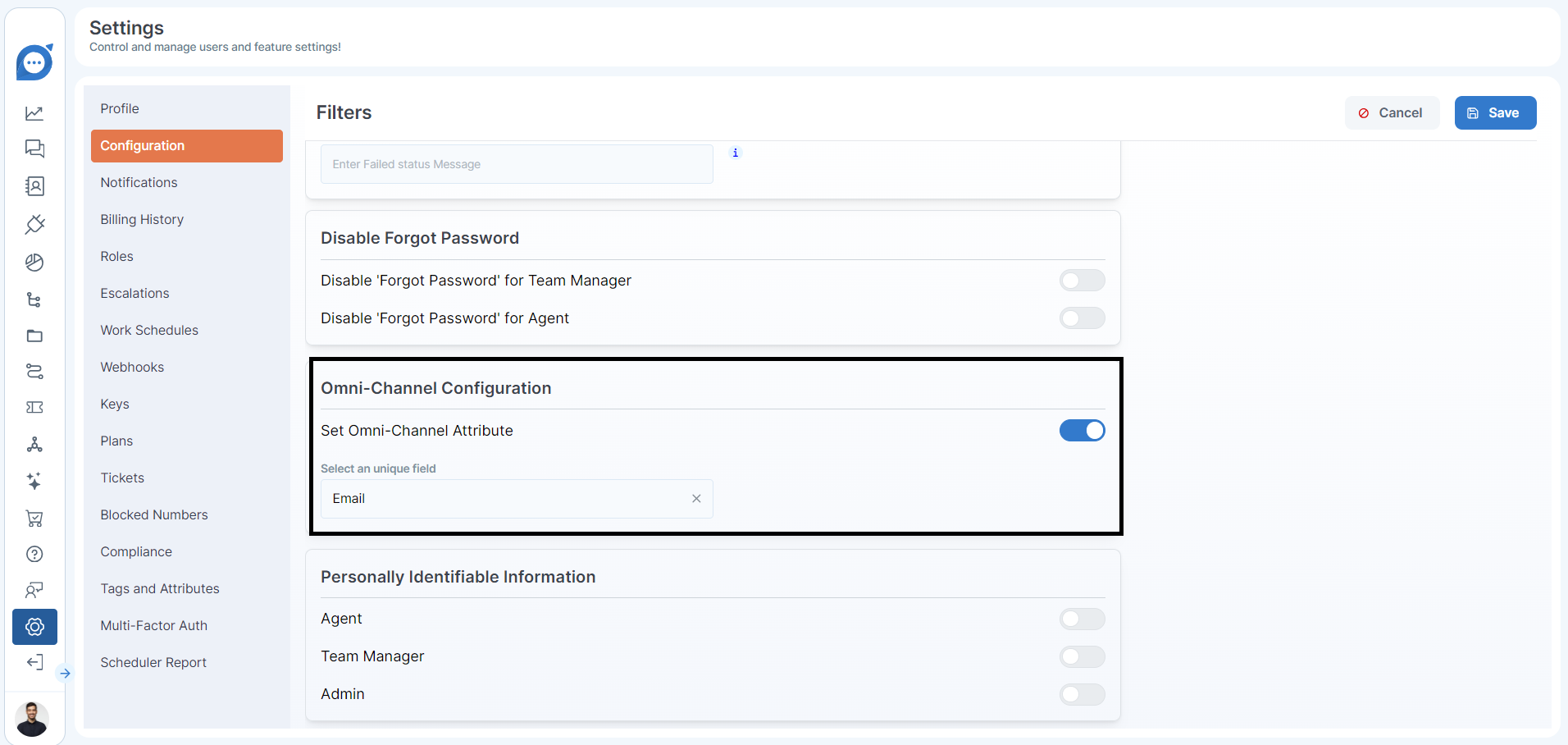
- Scroll to Omni-Channel Configuration.
- Enter the user’s Email or Mobile Number in the designated field.
- Toggle ON to begin merging all channels under that identifier.
- Confirm settings to enable real-time, cross-channel conversation sync.
Omni-channel integration brings all customer conversations—from WhatsApp, Facebook, Email, and more—into a single dashboard by using a unique identifier (email or phone number). This unified view accelerates response times and provides richer customer context.
-
Key Benefits
Configuration Steps
-
1. Open Configuration
-
Use Cases
- Agents view masked email/phone in open tickets; Admins unmask for escalation or audits.
- Marketing sends an email promotion; WhatsApp and Facebook replies appear side-by-side under one profile.
- Financial institutions mask PII for frontline support users, revealing full data only to compliance officers.
- Sales teams access complete conversation history—chatbot logs, social comments, email thread—all matched by the same phone number.
- Unified customer profiles feed into engagement dashboards, showing combined response rates, sentiment, and channel preferences.
-
1. Secure Support Desk:
Deploying PII Masking and Omni-Channel Sync together ensures both data security and an all-in-one customer view—empowering teams to deliver personalized service while safeguarding sensitive information.